FAQ
Criteria
- What are the criteria for the inclusion of fish species in the database?
The database includes all freshwater species, anadromous and catadromous species with a
minimum weight of at least 5 kg/11 lb plus European species with a minimum weight of at
least 1 kg/2.2 lb. - How do you treat hybrids and subspecies?
Hybrids are not registered, and the records in individual subspecies are combined (with the
exception of Salmo trutta). - Which data are collected?
Data about record weight, length and age are collected. - Is this the same specimen?
In most cases the heaviest, longest and oldest specimen were different fishes. - What does the category "rod & reel" mean?
These are sports catches by rod & reel. There are no further constraints with regard to
the fishing gear. For many species, no catch with rod & reel has been documented to
date. - What does the category "other methods" mean?
Records established by other catching methods, such as net, hand line, spear, bow fishing
etc. These records, like specimens found dead, are only listed if they exceed the rod &
reel records. - What does the category "questionable" mean?
These are records that are based on anecdotal reports or were only reported insufficiently.
The specifications cannot be verified. These records are only mentioned if they break the
verified record. - What does the category "rod & reel?" mean?
In these cases it is unclear if the fish was caught by rod & reel. The record weight or
length, however, is verified. - What are the length specifications?
Length records are always total length (TL) records, never standard length (SL) or fork
length (FL) measurements. If only the standard length is known, we have added "over". In the
case of Skates/Rays it is the width of the disc (WD).
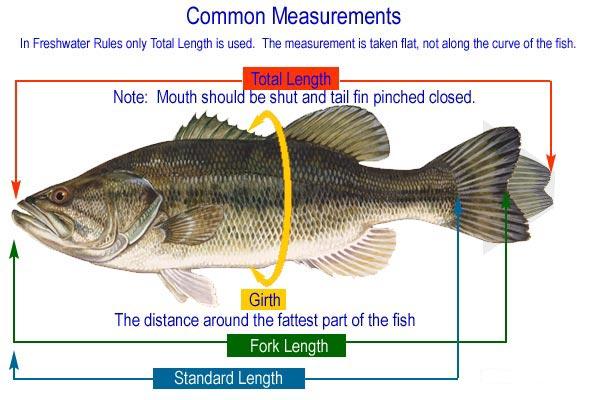
Abbreviations
- What do the specifications + (over) and ~ (approximately) mean?
This means that the weight was estimated according to the length/girth. Or the length was
estimated on the basis of the weight. - When is a catch listed as ex aequo in rank?
Catches marked as = (tie) show a deviation of 1% or less.
Difference to IGFA
- Are only reported catches acknowledged?
No, contrary to the IGFA, we proactively register all records published worldwide. For this
reason, our database covers hundreds of species weighing at least 5 kg, while the IGFA lists
far fewer freshwater "all tackle" records over 5 kg. - Do I have to be a member for my record to be acknowledged, or pay a fee?
No, contrary to the IGFA, no costs are incurred.
Catch reporting
- How can I report a catch?
We require all catch data as well as one or more good photographs of the catch for
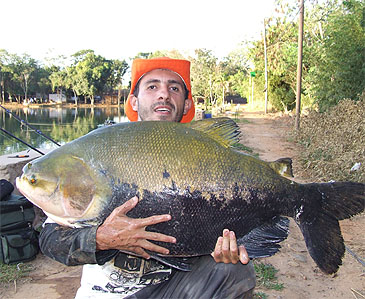
verification. Please use the catch form. - Which criteria make a "good" photograph?
- high resolution, true colors
- close-up image but no wide-angle photo
- the fish is held horizontally and stretched
- arms not stretched to the camera, hands visible
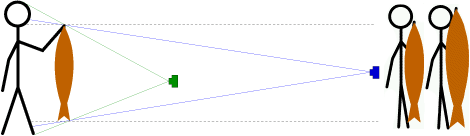
- Is a verification of the size specifications even possible by photograph?
No, a 100% verification is not possible, since the proportions depend on the distance of the
camera.
Incomplete data
- Why is the exact year of the catch sometimes unknown?
In the case of historic catches, the measurements have been passed down, but the exact date
of the catch was lost over time. Examples: "caught in the 19th century" means "18??" in the
database, "caught in the 1980s" means "198?" in the database. - Why does the database state e.g. "Amazon River" and "Amazon River System"?
Amazon River means that the record was established in the main river. Amazon River System
means that the record was established in the main river or in a tributary. The exact place
of the catch, however, was not documented. - Why do some records state several bodies of water and/or countries?
The exact place of the catch was not documented, but was limited due to the natural habitat
of the species.
